
Convicted at trial and believe the court got it wrong? A criminal appeal is not a retrial. It is a focused argument that a legal error, an unreasonable verdict, or an unfit sentence should be corrected. Julian Van Der Walle handles conviction and sentence appeals from BC provincial and supreme courts through to the Court of Appeal. Free consultation.
There are four main appeal routes: an appeal against conviction, an appeal against sentence, a summary conviction appeal to the BC Supreme Court, and an application for leave to appeal to the Supreme Court of Canada. Which route applies depends on whether the offence was tried summarily or by indictment and on what you are challenging. The deadlines are short, often 30 days from sentencing, so the time to act is immediately after conviction. Julian assesses appeal prospects across the BC Interior.
Challenging a guilty verdict on the basis that the trial judge made errors of law, errors in admitting or excluding evidence, or provided inadequate or incorrect jury instructions. If the appeal court finds the error may have affected the verdict, the conviction can be overturned and a new trial ordered or an acquittal entered.
Challenging a sentence as demonstrably unfit - either too harsh or outside the established sentencing range for the offence. The appeal court can vary the sentence if the trial judge made an error in principle, failed to consider relevant factors, or imposed a sentence that is clearly unreasonable.
Appeals from summary conviction matters heard in provincial court. These are heard by the BC Supreme Court and follow specific procedural rules under Part XXVII of the Criminal Code. Strict filing deadlines of 30 days from conviction or sentencing apply.
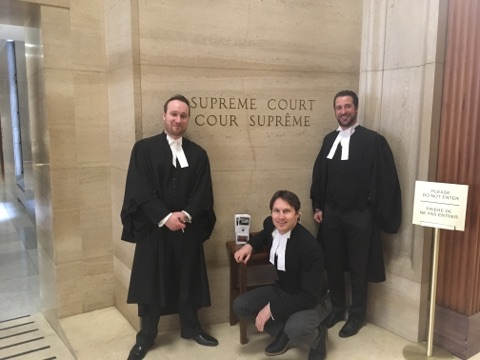
In rare cases, a further appeal to the Supreme Court of Canada may be available on questions of national legal importance. Julian has appeared before the Supreme Court of Canada and understands the leave application process and the threshold for review.
If you were convicted at the Vernon Law Courts, the Kelowna Law Courts, or any court in British Columbia and believe an error was made, an appeal may be available. But not every unfavourable result is appealable, and a good appellate lawyer tells you that honestly before you spend money on a case that cannot succeed.
An appeal is decided on the record from the trial. New evidence is only admitted in narrow circumstances under the Palmer test. The appeal court is not there to re-hear the case or to second-guess the trial judge on credibility. It is there to correct legal errors, unreasonable verdicts not supported by the evidence, and sentences that fall outside the acceptable range. Julian reviews the transcript and the trial record and gives a straight assessment of whether real grounds exist before taking the file forward.
Julian has appeared before the Supreme Court of Canada in criminal matters. This level of appellate experience is rare among lawyers practising in the BC Interior and reflects a deep understanding of appellate procedure and constitutional law.
Not every conviction can be appealed successfully. Julian provides a frank, evidence-based assessment of your appeal prospects before you invest time and resources. He identifies the strongest grounds and advises honestly on the likelihood of success.
Criminal appeals are won or lost on the written record. Julian meticulously reviews trial transcripts, exhibits, and rulings to identify errors that appellate courts will find persuasive. This detailed preparation is the foundation of effective appellate advocacy.
Criminal appeals follow a structured process set out in Sections 675 to 686 of the Criminal Code for indictable matters, and Part XXVII for summary conviction appeals.
Notice of appeal. Filed within the deadline, usually 30 days from sentencing. Missing the deadline requires an application to extend time, which is not guaranteed.
Transcripts and the appeal book. The trial transcript is ordered and the record assembled. This is the foundation of the appeal, since the court decides the case on what happened at trial.
Factum. Written argument setting out the grounds of appeal, the legal errors alleged, and the remedy sought. This is where appeals are won or lost.
Oral hearing. Argument before a panel of the BC Court of Appeal (or a single BC Supreme Court judge for summary conviction appeals).
Decision. The court can dismiss the appeal, order a new trial, enter an acquittal, or vary the sentence.
Julian identifies the most persuasive grounds available based on a thorough review of the trial record. The grounds that genuinely move appeal courts include:
Errors of law. The trial judge misapplied the law, misdirected the jury, admitted evidence that should have been excluded, or excluded evidence that should have been admitted. Errors of law are the strongest ground because the appeal court reviews them without deference.
Unreasonable verdict. The verdict is one that a properly instructed jury, acting judicially, could not reasonably have reached on the evidence. A high bar, but a real one under Section 686(1)(a)(i).
Misapprehension of evidence. The trial judge got a material fact wrong in a way that played a role in the reasoning.
Unfit sentence. The sentence is demonstrably unfit or the judge made an error in principle. Sentence appeals succeed more often than conviction appeals because the range arguments are concrete.
Ineffective assistance of counsel. In limited cases, where trial counsel’s performance fell below the standard and affected the result.
Every case begins with a private, judgment-free consultation. We review the details of your charges, examine disclosure, and discuss your version of events. You’ll receive clear, straightforward guidance about your legal position, potential outcomes, and the best path forward so you can make informed decisions.
No two cases are the same, which is why your defence is carefully tailored to your circumstances. We analyze evidence, identify weaknesses in the Crown’s case, explore Charter issues, and develop a focused legal strategy designed to protect your rights and achieve the strongest possible result.
From negotiations to trial, your case is handled with preparation and determination. We advocate firmly on your behalf, challenge evidence where appropriate, and pursue every available legal avenue. Throughout the process, you remain informed, supported, and confident in the defence being presented.
Or fill out the form below to receive a free and confidential initial consultation.
If you have been criminally charged and are not sure what to do, you need to get competent legal representation right away.
© 2026 Vernon Criminal Defence | All Rights Reserved