
A drug charge in BC is laid under the Controlled Drugs and Substances Act and the exposure ranges from a small fine to life imprisonment depending on the substance and the section Crown elects. Julian Van Der Walle defends drug files across the Okanagan, Shuswap, and Kootenays. Free consultation.
The Controlled Drugs and Substances Act creates four primary drug offences: simple possession under Section 4, trafficking under Section 5(1), possession for the purpose of trafficking under Section 5(2), and production under Section 7. Each carries its own penalty range and its own defence considerations. Federal Crown Counsel prosecutes CDSA files across BC. Julian Van Der Walle handles drug charge defence in Vernon, Kelowna, Penticton, Salmon Arm, and across the BC Interior.
Possession of a controlled substance for personal use. The Crown must prove knowledge, consent, and control over the substance. Penalties depend on the drug schedule - cannabis possession has been largely decriminalized, while possession of Schedule I substances (cocaine, heroin, fentanyl) remains a serious criminal offence.
Possessing a controlled substance with the intent to sell, distribute, or share it. Crown Counsel relies on quantity, packaging, cash, scales, and communication records to infer trafficking intent. Carries significantly harsher penalties than simple possession.
Selling, giving, transporting, or offering to distribute a controlled substance. This includes any transfer or offer to transfer. Schedule I trafficking carries a maximum sentence of life imprisonment and potential mandatory minimums depending on aggravating factors.
Manufacturing, cultivating, or producing a controlled substance. Includes growing cannabis beyond legal limits, operating drug labs, or extracting concentrated substances. Penalties escalate sharply when production involves Schedule I drugs or occurs near schools or public areas.
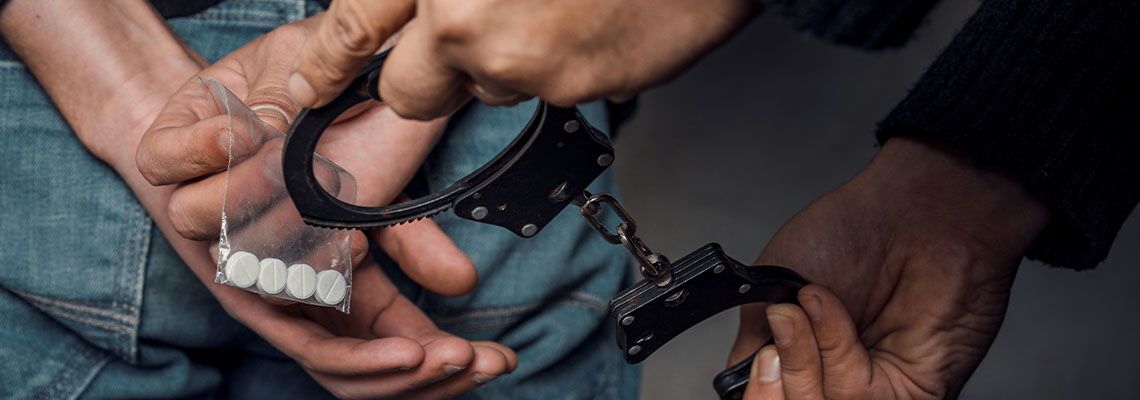

Drug prosecutions in BC turn on physical evidence: the substance, the quantity, the packaging, sometimes scales and cash, sometimes phones. All of that evidence came into Crown’s hands through a police investigation, and every step of that investigation has to comply with the Canadian Charter of Rights and Freedoms. Where it does not, the evidence can be excluded under Section 24(2) and the file can collapse.
Section 8 (unreasonable search and seizure) is the most productive defence ground in drug files. The traffic stop that led to the search, the grounds for the investigative detention, the Information to Obtain on the search warrant, the scope of the warrant, the execution of the warrant: each is a potential point of attack. Julian reviews every drug file’s disclosure for these specific issues before recommending plea or trial.
Section 9 (arbitrary detention) and Section 10(b) (right to counsel) come up at the roadside and at the detachment. Section 7 (the right against self-incrimination) governs statements obtained during questioning. The defence position on a drug file is usually built from the disclosure, not from what is said at trial.
Drug cases stand or fall on the legality of the search. Julian scrutinizes warrant applications, Information to Obtains (ITOs), and the grounds police relied on. If the search violated your section 8 Charter rights, the evidence may be excluded entirely.
Julian handles every drug file himself from initial consultation through to resolution. You deal directly with your lawyer, not a junior associate or paralegal. Your defence strategy receives his complete, undivided focus.
Years of practice at the Vernon Law Courts means Julian understands how local Crown prosecutors approach drug cases, which judges handle which matters, and how RCMP detachments in the Okanagan conduct drug investigations.
Penalties for CDSA offences vary based on three factors: which section Crown is proceeding under, the schedule the substance falls into, and whether Crown elects summary or indictment.
Simple possession (Section 4). The lowest tier. Maximum six months on summary conviction, seven years on indictment for Schedule I substances. BC courts impose lower outcomes for first-time files: conditional discharges, fines, or referrals to treatment programs. The federal government ran a three-year decriminalization pilot in BC from January 2023 through early 2025 that exempted personal-use possession of small amounts of opioids, cocaine, methamphetamine, and MDMA. That pilot has ended and personal possession is again chargeable across BC, but Crown discretion on small-amount files is still informed by harm reduction principles.
Possession for the purpose of trafficking (Section 5(2)). A significant escalation. Crown infers PPT from quantity, packaging (individual baggies), cash on the scene, scales, and communications evidence. Maximum life imprisonment for Schedule I substances on indictment. The defence work on PPT files often focuses on attacking the inferences Crown wants to draw.
Trafficking (Section 5(1)). Same maximum as PPT. Crown must prove an actual transfer or attempt to transfer, not just intent. Wire interception, controlled buys, and informer evidence are common.
Production (Section 7). Cultivation, manufacturing, or any process that produces a controlled substance. Maximum life for Schedule I. Clandestine lab operations attract enhanced sentencing under the aggravating-factors provisions.
Most successful drug file defences in BC run through Section 8 of the Charter. The Crown’s case usually depends on physical evidence that was found through a search. If the search violated Section 8, the evidence is subject to exclusion under Section 24(2). The framework for Section 24(2) exclusion was set in R v Grant, 2009 SCC 32, with refinement in R v Harrison, 2009 SCC 34.
The Information to Obtain (ITO). Where the search was authorized by a warrant, the ITO is the foundation. Defence reviews it for accuracy, for sufficiency of grounds, for material non-disclosure, and for boilerplate that signals the affiant was not careful. A successful ITO challenge can result in the warrant being quashed and everything found in the search being excluded.
The traffic stop. Where the search was not warrant-based and started from a traffic stop, the lawfulness of the stop is the threshold question. Stops that extend beyond their initial purpose, investigative detentions without grounds under R v Mann, 2004 SCC 52, and stops based on profiling rather than observable conduct all attract Section 9 (arbitrary detention) attack.
Consent searches. Crown will sometimes claim the accused consented to the search. Consent has to be informed and voluntary. Where it was not, the search is unauthorized.
Section 10(b) right to counsel. Where the accused was detained, Section 10(b) required police to inform of the right to counsel and to provide a reasonable opportunity to call a lawyer before continuing the investigation. Breaches here often lead to exclusion of statements and, depending on the file, the physical evidence.
Julian Van Der Walle reviews every drug file’s disclosure for these specific issues before recommending plea or trial. A successful Charter application changes the entire trajectory of the file.
Every case begins with a private, judgment-free consultation. We review the details of your charges, examine disclosure, and discuss your version of events. You’ll receive clear, straightforward guidance about your legal position, potential outcomes, and the best path forward so you can make informed decisions.
No two cases are the same, which is why your defence is carefully tailored to your circumstances. We analyze evidence, identify weaknesses in the Crown’s case, explore Charter issues, and develop a focused legal strategy designed to protect your rights and achieve the strongest possible result.
From negotiations to trial, your case is handled with preparation and determination. We advocate firmly on your behalf, challenge evidence where appropriate, and pursue every available legal avenue. Throughout the process, you remain informed, supported, and confident in the defence being presented.
Or fill out the form below to receive a free and confidential initial consultation.
If you have been criminally charged and are not sure what to do, you need to get competent legal representation right away.
© 2026 Vernon Criminal Defence | All Rights Reserved