
Convicted at trial and believe errors were made? A criminal appeals lawyer Vernon clients trust can review your case for grounds to overturn the conviction or reduce the sentence. Julian Van Der Walle handles criminal appeals in the BC Court of Appeal and the Supreme Court of Canada.
A criminal appeals lawyer Vernon defendants consult after conviction understands that the appellate process is fundamentally different from trial. Appeals are not retrials. They examine whether legal errors occurred that affected the outcome. Julian Van Der Walle reviews trial records and identifies the strongest grounds for a successful appeal.
Challenging a guilty verdict on the basis that the trial judge made errors of law, errors in admitting or excluding evidence, or provided inadequate or incorrect jury instructions. If the appeal court finds the error may have affected the verdict, the conviction can be overturned and a new trial ordered or an acquittal entered.
Challenging a sentence as demonstrably unfit - either too harsh or outside the established sentencing range for the offence. The appeal court can vary the sentence if the trial judge made an error in principle, failed to consider relevant factors, or imposed a sentence that is clearly unreasonable.
Appeals from summary conviction matters heard in provincial court. These are heard by the BC Supreme Court and follow specific procedural rules under Part XXVII of the Criminal Code. Strict filing deadlines of 30 days from conviction or sentencing apply.
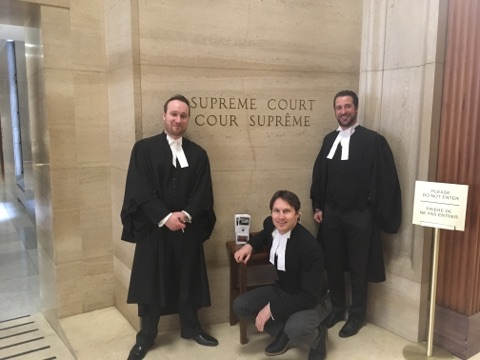
In rare cases, a further appeal to the Supreme Court of Canada may be available on questions of national legal importance. Julian has appeared before the Supreme Court of Canada and understands the leave application process and the threshold for review.
If you have been convicted at the Vernon Law Courts or any court in British Columbia and believe errors were made at trial, a criminal appeals lawyer Vernon convictions are challenged from can review your case. Julian Van Der Walle provides appellate representation grounded in detailed analysis of the trial record, the applicable law, and the realistic prospects of success on appeal.
Criminal appeals require a fundamentally different skillset than trial advocacy. The appeal court reviews the written record of the trial proceedings, not live witnesses. Success depends on identifying specific legal errors, framing them within the appellate standard of review, and presenting persuasive written and oral arguments to a panel of justices. Julian prepares comprehensive factums and delivers focused oral submissions at the BC Court of Appeal in Vancouver.
Julian has handled appeals arising from convictions for assault, drug offences, impaired driving, firearms charges, and other criminal matters. He has appeared before the Supreme Court of Canada in criminal matters, demonstrating appellate experience at the highest level of the Canadian court system.
Julian has appeared before the Supreme Court of Canada in criminal matters. This level of appellate experience is rare among lawyers practising in the BC Interior and reflects a deep understanding of appellate procedure and constitutional law.
Not every conviction can be appealed successfully. Julian provides a frank, evidence-based assessment of your appeal prospects before you invest time and resources. He identifies the strongest grounds and advises honestly on the likelihood of success.
Criminal appeals are won or lost on the written record. Julian meticulously reviews trial transcripts, exhibits, and rulings to identify errors that appellate courts will find persuasive. This detailed preparation is the foundation of effective appellate advocacy.
A criminal appeals lawyer Vernon clients retain after conviction guides them through a structured appellate process with strict procedural requirements.
Step 1 – Filing the Notice of Appeal: For indictable matters, the notice must be filed at the BC Court of Appeal within 30 days of conviction or sentencing. Summary conviction appeals are filed at the BC Supreme Court within 30 days. Missing these deadlines requires a separate application for an extension of time.
Step 2 – Ordering Transcripts: The full trial transcripts and relevant exhibits must be ordered and filed with the appeal court. Julian identifies which portions of the record are essential to the appeal grounds.
Step 3 – Preparing the Factum: The factum is the written argument that sets out the errors alleged, the applicable law, and the remedy sought. This is the most important document in the appeal. Julian prepares detailed, persuasive factums that address each ground of appeal.
Step 4 – Oral Hearing: A panel of justices (typically three) hears oral submissions from both the appellant and Crown respondent. Julian presents focused, responsive oral arguments that reinforce the strongest points from the factum.
Step 5 – Decision: The appeal court may dismiss the appeal, allow the appeal and order a new trial, enter an acquittal, or vary the sentence. Decisions can take weeks to months after the hearing.
Julian identifies the most persuasive grounds available in your case based on a thorough review of the trial record.
Errors of Law: The trial judge misinterpreted or misapplied the law, such as applying the wrong legal test for an element of the offence, mischarging the jury on the burden of proof, or making an incorrect ruling on a Charter application.
Evidentiary Errors: The trial judge admitted evidence that should have been excluded (such as unconstitutionally obtained evidence) or excluded evidence that should have been admitted, and this error affected the verdict.
Unreasonable Verdict: The conviction is one that no properly instructed trier of fact, acting judicially, could reasonably have rendered on the evidence presented at trial.
Procedural Unfairness: The accused was denied a fair trial due to procedural irregularities, ineffective assistance of trial counsel, non-disclosure of relevant evidence by the Crown, or other breaches of fundamental justice under section 7 of the Charter.
Sentence Errors: The trial judge made an error in principle in sentencing, failed to consider or properly weigh relevant mitigating or aggravating factors, or imposed a sentence outside the established range for the offence.
Every case begins with a private, judgment-free consultation. We review the details of your charges, examine disclosure, and discuss your version of events. You’ll receive clear, straightforward guidance about your legal position, potential outcomes, and the best path forward so you can make informed decisions.
No two cases are the same, which is why your defence is carefully tailored to your circumstances. We analyze evidence, identify weaknesses in the Crown’s case, explore Charter issues, and develop a focused legal strategy designed to protect your rights and achieve the strongest possible result.
From negotiations to trial, your case is handled with preparation and determination. We advocate firmly on your behalf, challenge evidence where appropriate, and pursue every available legal avenue. Throughout the process, you remain informed, supported, and confident in the defence being presented.
Or fill out the form below to receive a free and confidential initial consultation.
If you have been criminally charged and are not sure what to do, you need to get competent legal representation right away.
© 2026 Vernon Criminal Defence | All Rights Reserved